Skip to content







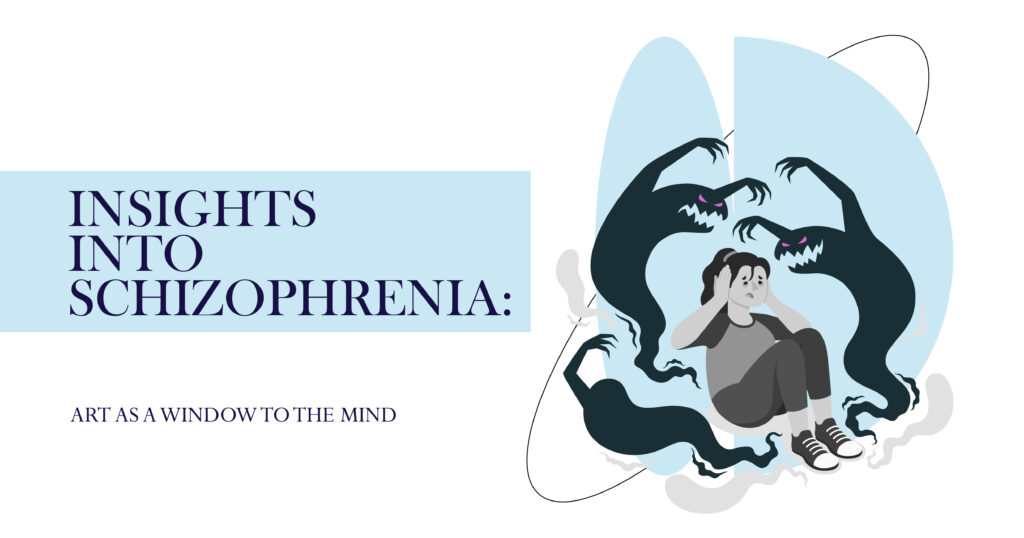
There’s something oddly beautiful about a picture that wasn’t meant for the gallery. The kind of drawing that spills out of someone’s mind. For many living with schizophrenia, this visual release is a language. Some sketches have no clear form at first glance. They could be just fractured shapes. Intense color streaks, and eyes. The person who draws it might not say much. But their art piece says plenty. That’s the power of schizophrenia drawings. They give a glimpse into a mind the world doesn’t always understand.
We’ll discuss how art reveals what words can’t. These drawings are also diagnostic and therapeutic. And weirdly enough, kind of grounding.
What Do Schizophrenia Drawings Reveal About the Inner Mind?
Have you ever seen a drawing by someone living with schizophrenia? There’s often a sense of urgency. Almost like the image had to be dragged out of their head before it disappeared.
These drawings often reveal:
- Fragmentation of thoughts: Images may look disjointed, with no logical pattern.
- Hyperfocus on symbols: Repeating shapes, faces, or religious elements.
- Distorted reality: Things appear warped, floating, or unrealistically combined.
- Color as emotion: Bold, contrasting, or muddied hues that seem to “argue” on the page.
- Themes of surveillance or fear: Such as eyes watching, figures hiding, or shadowy figures.
What’s wild is that these aren’t just artistic choices. They’re clues. Real, emotional breadcrumbs. Left behind by someone navigating psychosis. They’re often more honest than a therapy session. When verbal language fails, the paintbrush can help.
The Hidden Layers of Psychiatric Symptoms in Mental Health Struggles
Let’s be real, psychiatric symptoms can be sneaky. They don’t always announce themselves with flashing signs. In fact, they often slip into daily life in ways that even the person experiencing them might miss. But in art? You see them. Plain as day.
Here’s a glimpse at how symptoms might show up in visual work:
| Symptom Type | How It Manifests in Art |
| Hallucinations | Unseen figures, unusual presences, unnatural environments |
| Delusions | Religious imagery, paranoid symbolism, grandiose designs |
| Disorganized thinking | Incoherent layout, jumbled imagery, sudden shifts in style |
| Flat affect or apathy | Minimal detail, faded colors, lack of expression in faces |
| Anhedonia | Blank spaces, absence of meaningful themes or subjects |
| Paranoia | Overuse of eyes, locked doors, isolated figures |
It’s heartbreaking to see the isolation or chaos on paper. Especially when someone can’t say it out loud. But it’s also a window. One that therapists and doctors can actually look through to understand what’s going on beneath the surface. And sometimes, it’s the only window available.

How Art Therapy Unlocks Emotional Expression Amid Cognitive Disorders
Some people talk. Others scream. And then there are those who, draw. For individuals dealing with cognitive disorders, especially those tied to schizophrenia, finding the right words can feel like trying to catch fog with your hands. But give them a canvas? Suddenly, the fog has form.
Art therapy doesn’t require verbal articulation. That’s the beauty of it.
Visual Expression’s Power in Capturing the Chaos of Schizophrenia
Think about it: how do you explain that your thoughts feel like TV static? Or that your brain keeps interrupting itself? Through lines, colors, and chaotic geometry, a person can externalize the storm inside their mind. Visual expression allows abstract emotional chaos to take visible shape.
The Grip of Cognitive Challenges and Their Echo in Creative Therapy
When cognitive symptoms, like memory gaps, or impaired concentration, show up in a therapy session, they’re obstacles. But in art? They’re textures. They become part of the narrative. Shaping the story that the drawing tells. Each brushstroke becomes a reflection. In some cases, a form of resistance.
The Overwhelming Impact of Psychological Art on Self-Perception
You ever write something raw, come back to it later, and go: “Whoa… I didn’t know I felt that”? That’s kind of how psychological art works, especially in mental health settings. For someone with schizophrenia, looking back at their own work can be like meeting a version of themselves they didn’t realize existed.
And that kind of confrontation? It’s not easy. But it is powerful.
Some patients report feeling both frightened and liberated when they revisit their own schizophrenia drawings. Why? Because the art exposes subconscious things that have been marinating quietly in the back of the mind. By seeing it out in the open, it becomes real. Tangible. And once it’s real, it can be named. And if it can be named? It can be dealt with.
Reclaiming Clarity and Healing Through Targeted Art Techniques
Let’s pause here for a second. We’ve talked about the why, but what about the how? Because not all art therapy is just “draw what you feel.” At Lonestar Mental Health, clinicians often use targeted techniques that blend structure with creative freedom.
Here are a few common methods:
- Mandala coloring to promote focus and relaxation
- Abstract painting to externalize confusion or internal noise
- Timeline sketching for exploring personal history and trauma
- Symbol mapping, where patients assign meaning to repeated shapes
- Emotion wheels drawn in colors to identify mood patterns
- Narrative drawing (telling a story frame-by-frame like a comic)
These aren’t just activities. They’re maps, routes back to clarity. And when someone feels like they’re losing touch with reality, that kind of visual roadmap can honestly feel like a lifeline.
Fostering Recovery and Insight With Art Therapy at Lonestar Mental Health
Recovery from schizophrenia isn’t a straight line. It zigs. It loops back. It stalls. And sometimes, it goes quiet for a while. But at Lonestar Mental Health, they’ve found that incorporating art therapy into treatment plans gives patients something many traditional methods don’t: freedom without fear of judgment.
| Aspect of Recovery | How Art Therapy Supports It |
| Identity reconstruction | Patients explore who they are beyond their diagnosis |
| Emotional regulation | Art offers a safe outlet for intense feelings |
| Social connection | Group art sessions reduce isolation and foster empathy |
| Treatment engagement | Creative tasks increase participation and motivation |
| Self-awareness | Reviewing one’s own work fosters insight and reflection |
| Empowerment | Completing a piece instills pride and a sense of control |
There’s something incredibly grounding about creating something, especially when your world feels like it’s spinning. The staff at Lonestar gets that. They don’t just hand out supplies and hope for the best. They walk with you through every sketch, every relapse, every breakthrough.
And if you or someone you love is struggling? Contact Lonestar Mental Health. No pressure. No expectations. Just help, creative, compassionate, and human.
FAQs
How does art therapy contribute to managing psychiatric symptoms in individuals with schizophrenia?
It gives individuals a way to express and process internal experiences. One that might be too complex for words. This can reduce distress and support better communication with therapists.
What role does visual expression play in enhancing emotional expression during therapy sessions?
Visual expression helps externalize emotions in a nonverbal way. This helps and allows people to reflect on their feelings. In a way that’s safe and creative.
Can art therapy be effective for individuals with cognitive disorders related to schizophrenia?
Absolutely. It bypasses verbal and memory-related challenges. This then offers a more intuitive and sensory pathway to healing.
How does psychological art serve as a medium for healing and self-discovery in mental health treatment?
It focuses on translating abstract thoughts into visible images. This allows individuals to confront and explore. Eventually making peace with parts of themselves they didn’t fully understand.
What are the benefits of incorporating creative therapy techniques into mental health treatment plans for schizophrenia?
It creates alternative paths to healing that don’t rely on traditional talk therapy. Helps build confidence and strengthens emotional resilience. Also, it gives people a powerful tool to reclaim their experiences.